Web Design · 28 September 2026 · 8 min read
Why Every Website Looks the Same in 2026 - and How to Make Yours Stand Out
Template sites and AI tools have flattened the web into one interchangeable look. Here's why blending in costs UK businesses enquiries - and what distinctive web design and development actually involves.
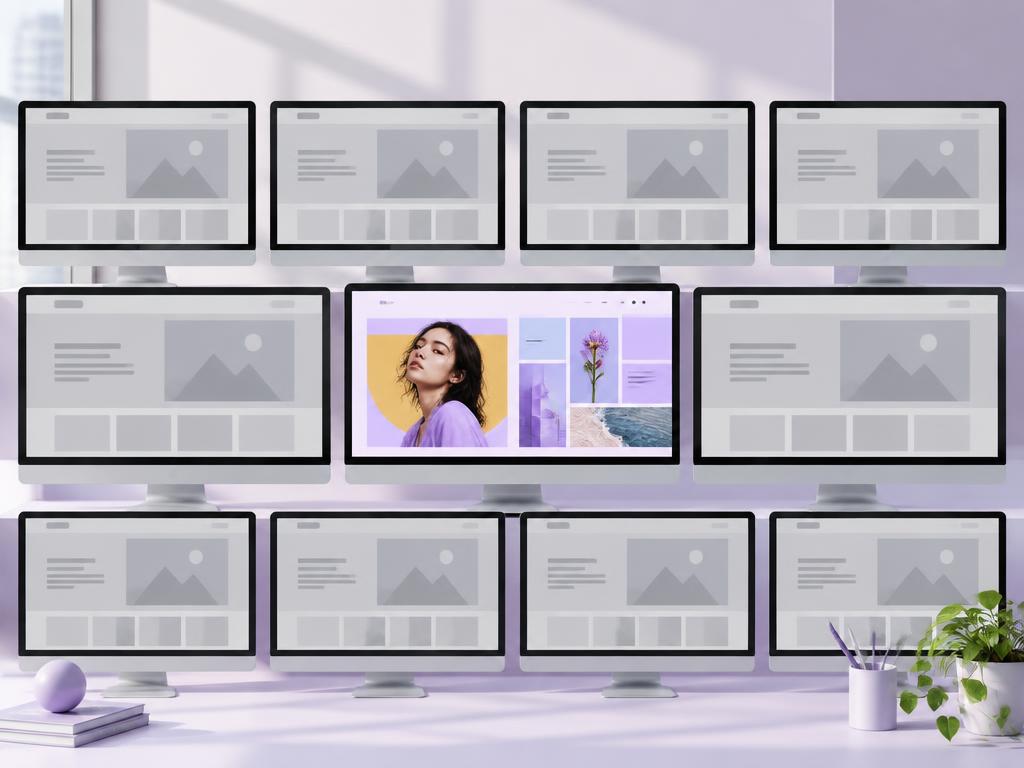
Scroll through the websites of ten competing businesses in your industry. Chances are you'll see the same layout, the same stock photography, the same rounded buttons and the same three-word headline in a bold sans-serif. It's not a coincidence - and it's the biggest quiet problem in web design right now.
Templates, page builders and AI tools have made a decent-looking website cheaper and faster than ever. They've also made it possible for everyone to build the same one. Here's why the web flattened, what it's costing UK businesses, and what it actually takes to build a site people remember.
The great flattening: why all websites look alike now
The sameness isn't laziness - it's economics. Templates and builders optimise for the average: layouts proven to be "safe", imagery that offends nobody, copy structures copied from the top-ranking pages. AI tools amplify this, because they're trained on what already exists and generate the statistical middle of the web.
The result is competence without character. Every site is fine. No site is memorable. And when ten competitors are all fine in the same way, price becomes the only visible difference left.
- Same hero, same promise: a full-width photo, a three-word headline, a purple button
- Same stock feel: interchangeable imagery that could belong to any company
- Same safe copy: feature lists instead of a point of view
- Same interaction: no personality in how the page moves, loads or responds
What blending in actually costs you
Memory
Most visitors arrive, skim, leave, and repeat the exercise across several tabs. Research on choice overload is clear: when options feel similar, people default to the cheapest or the one they already know. A site nobody remembers five minutes later can't enter that decision - no matter how good the product behind it is.
Trust
Buyers have become fluent in spotting template sites, and many read them as a signal: if the website is a template, what else is? For service businesses especially - where the product is people and expertise - the website is the first proof of quality. Generic design quietly contradicts the "we're different" pitch in your copy.
Search and AI visibility
Google has been explicit that unoriginal, mass-produced content struggles to rank. AI search assistants go further - they summarise and cite sources, and they have no reason to cite a page that says what a hundred others say. In 2026, being distinctive isn't just a design stance; it's an SEO strategy.
What "standing out" actually means (and what it doesn't)
Distinctive design is often misunderstood as decoration - loud colours, gimmicky animation, whatever trend is on design Twitter this month. That's costume, not character. A site can be wildly unusual and still forgettable, and it can be restrained and unmistakable. The difference is specificity:
- A point of view: a clear opinion about what you do, who it's for, and what you won't do
- A typographic identity: type chosen for your brand, not the default everyone else defaulted to
- Real imagery: photography of your team, your work and your process instead of stock
- Copy with a voice: sentences only your business would write
- Considered detail: how the site moves, loads, and responds - the texture of the experience
Look at the brands people actually remember online. They're rarely the loudest - they're the most specific. Specificity is what design is for; everything else is decoration.
Does distinctive design still convert?
This is the objection every business owner should ask, and the honest answer is that distinctiveness and conversion aren't rivals - one is the vehicle for the other. A memorable, specific site still needs the fundamentals: clear structure, fast load times, obvious calls to action, accessible markup and clean code underneath.
That's the real distinction between bespoke web development and a template: not the surface, but the decisions underneath it. Strategy decides what each section must achieve. Design gives it a form only you occupy. Development makes it fast, accessible and built to grow - not a theme you'll outgrow.
A quick audit: does your site blend in?
Open your website and your three closest competitors' side by side, then ask:
- Cover the logos - could anyone tell whose site is whose?
- Is the photography genuinely yours, or could it belong to any business?
- Read the first headline aloud - would it be true of your competitor too?
- Does anything about the experience - motion, type, layout - reflect your personality?
- If a prospect visited all four sites in one sitting, what would they remember about yours?
If the answers are uncomfortable, that's the opportunity. In a market where everyone has converged on the same safe look, being genuinely, specifically yourself is the cheapest competitive advantage left on the web.
StudioDG builds bespoke websites for UK businesses that refuse to blend in - strategy, design and development under one roof, with no juniors on your project. If your site looks like everyone else's, get in touch and we'll show you what a site that's unmistakably yours looks like.